

Find out if holly berries are poisonous to pets or small children and get expert tips on avoiding any harm.
:max_bytes(150000):strip_icc():format(jpeg)/GettyImages-2186022591-171c61ed4f3d471c915a4212ddd443cb.jpg "Holly leaves and berries")
Marc Guitard / Getty Images
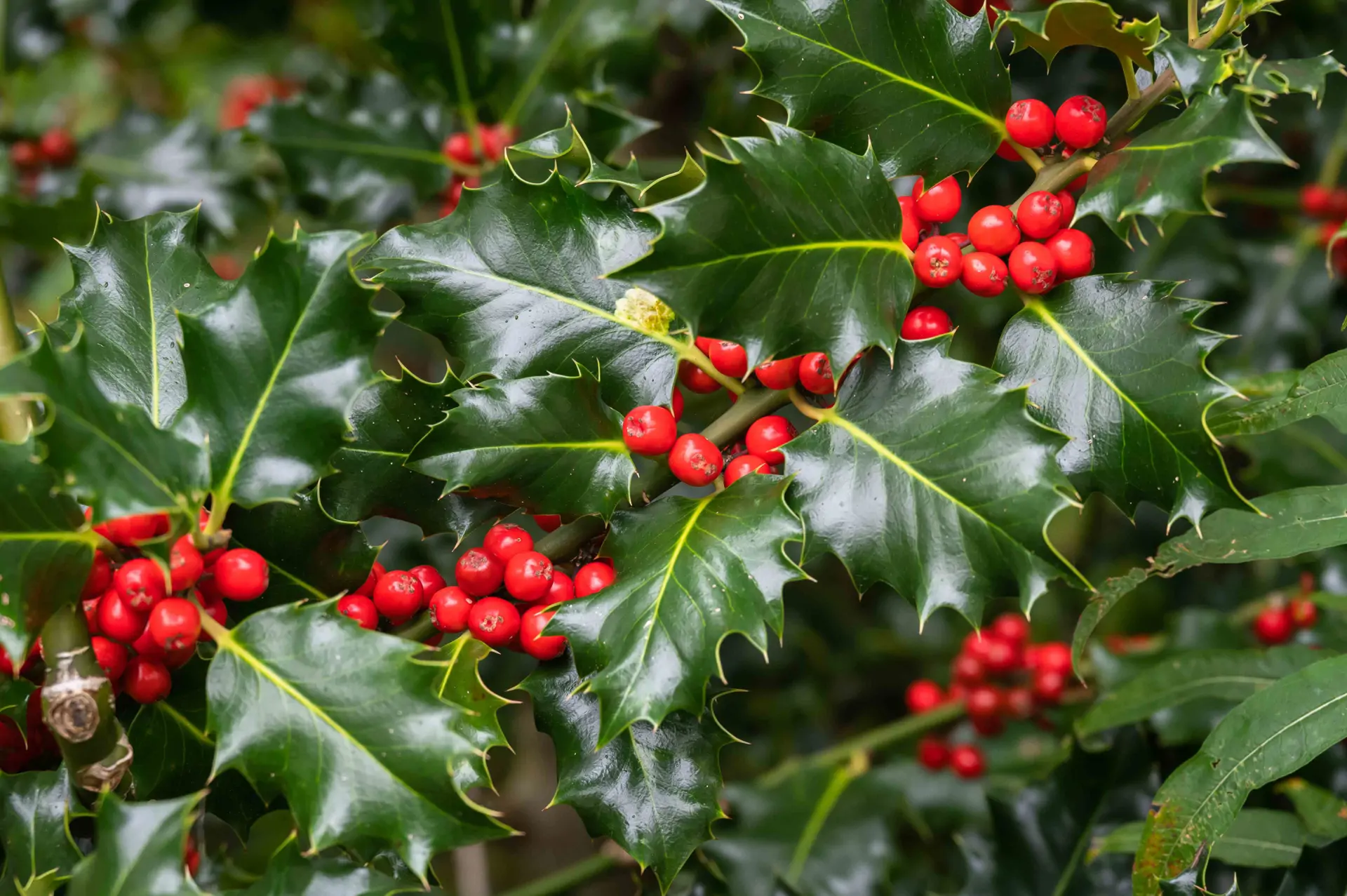
Just one sprig of holly with its glossy, serrated leaves and red berries can transport an arrangement from “any day” to “holiday.” But are holly berries poisonous to pets or children that get a little too curious? Despite their festive charm, all types of holly contain toxins that are potentially dangerous if eaten. If you want to hang a red-berried holly wreath or tuck a spray into a table arrangement or atop a gift, here's what to know for safe holiday decorating.
Meet Our Expert
Tina Wismer is a senior director of toxicology at the ASPCA Animal Poison Control Center.
Related: 6 Pet-Friendly Holiday Houseplants to Celebrate the Season Safely
Types of Holly Used in Holiday Decor
Two main types of holly with red berries shine in winter floral arrangements, wreaths and garlands, and Christmas centerpieces to bring the outside in with red, green and, in the variegated types, gold.
English Holly

The most popular type of holly seen during the holidays is English holly (Ilex aquifolium), distinguished by its spiny evergreen leaves in deep glossy green or green edged in gold. Native to Europe, North Africa, and Western Asia, it’s become a popular American garden tree in Hardiness Zones 7-9. English holly requires good drainage and even moisture to thrive.
English holly can reach 30 feet high and 15 feet wide, and because they require a male and female tree for pollination, you’ll need space for two if you want berries. They tolerate regular pruning, so they work well for hedging or topiary. Berry colors can be gold, orange, and burgundy, but the classic red dominates the holiday scene.
English holly can proliferate and naturalize readily in good conditions, to the point that it is now on the invasive plant list in Oregon, California, and Alaska, and is endangering native habitat in Redwood National Park and Yosemite National Park.
Winterberry

Winterberry (Ilex verticillata) is a deciduous holly (not evergreen like English holly) with prolific berries used for holiday decorating. It likewise produces the best berry show with a male-female set. This native shrub ranges from five to 15 feet high and will slowly form thickets if allowed.
In the garden, winterberry is hardy in a wider range than its evergreen cousin, from Zones 3-9. It can tolerate both sandy and clay soil. The berries are enjoyed by more than 48 species of birds, so if planting for use in decorating, you may have some competition for those berries. Once cut, the berries are not as long-lasting as the evergreen type of holly.
Related: 15 Winter Planter Ideas for Holiday Cheer
How Toxic Are Holly Berries?
Dr. Tina Wismer, senior director of toxicology at the ASPCA Animal Poison Control Center, says, “Holly is a common holiday plant that people decorate with. The leaves themselves are leathery and prickly and are not typically ingested by pets or grazing animals in large amounts.”
Wismer points out that “both the leaves and berries contain saponins,” soap-like compounds, but the berries are more likely to be eaten because they look more appealing and may fall to the floor once dried. When swallowed, saponins “can be irritating to the digestive tract, leading to vomiting and diarrhea,” she explains. However, don't panic if your dog or cat eats some holly berries. "Severe symptoms after ingestion are not typical present in pets,” Wismer adds. The ASPCA classifies both leaves and berries as “low toxicity.”
Related: Is Christmas Cactus Poisonous to Cats That Get Too Curious? Here's What to Know
There is more concern about humans ingesting the berries, however. While one study of 103 cases of children who ate six berries or less showed no ill effects, toxicologists say that in some cases, perhaps in higher quantity, it could cause severe digestive distress and dehydration in humans, according to the National Capital Poison Center.
Precautions to Take
While the effects of holly ingestion tend to be mild, the safest course is to keep them away from children and pets. Keep holly berries out of reach and be alert when kids and pets are nearby. Make sure to clean up any fallen berries immediately.
To be extra careful, consider swapping out holly for other festive plants. Some holiday decor alternatives that are non-toxic to pets include Christmas cactus (Schlumbergera x buckleyi), bromeliads (Tillandsia spp.), African violets (Streptocarpus sect. Saintpaulia), and orchids.
Related: 10 Best Types of Fresh Greenery for Holiday Decorating
What to Do If Holly Is Ingested
If a berry or two gets eaten, remove any remaining berries from the mouth as soon as possible. Use a small amount of water or milk to clear any berry material from the mouth and esophagus. For help with your pet, call your veterinarian or the ASPCA Animal Poison Center and Pet Poison Helpline (both of which may charge a fee). If a person has ingested holly, call Poison Control.
Frequently asked Questions
Why is holly associated with the holiday season?
Holly has been adding winter cheer to hearths for centuries. For ancient Druids, Celts, and Romans, holly’s evergreen leaves were a talisman of hope for spring's return. The ancient Romans gave holly offerings to Saturn during Saturnalia in late December. Spiny holly leaves are richly represented in Christian symbology too.
Are holly berries harmful to birds?
The berries of both deciduous and evergreen types of holly are enjoyed safely by birds, nourishing them during leaner seasons of fall and winter.